Why 1 in 7 people are “Silent Drifters” in the digital age, and the “well-intentioned violence” that’s failing them.
Introduction
The Hidden Digital Divide – The Unseen 14%
What comes to mind when you hear the term “digital divide”?
Most people probably picture seniors who can’t master their smartphones, or the impoverished who cannot access the internet for financial reasons. That is, without a doubt, a critical problem.
However, in modern society, there exists a digital divide that is qualitatively different, more deeply rooted, and far more overlooked.
They own smartphones and, at first glance, appear to be integrated into society. It is precisely for this reason that their struggles do not appear in statistics, they are not recognized as targets for support, and they remain outside our consciousness.
Who are they? What exactly is this “Hidden Digital Divide”?
They are people with a cognitive characteristic known as borderline intellectual functioning.
They are not diagnosed with an intellectual disability and can (seemingly) lead normal daily lives.
However, this group—estimated to comprise approximately 14% (1 in 7) of the population—is placed in a structurally and extremely vulnerable position within our increasingly complex digital society. They are “unseen” by society, continuing to exist in every era and every country as the “Eternal 14%.”
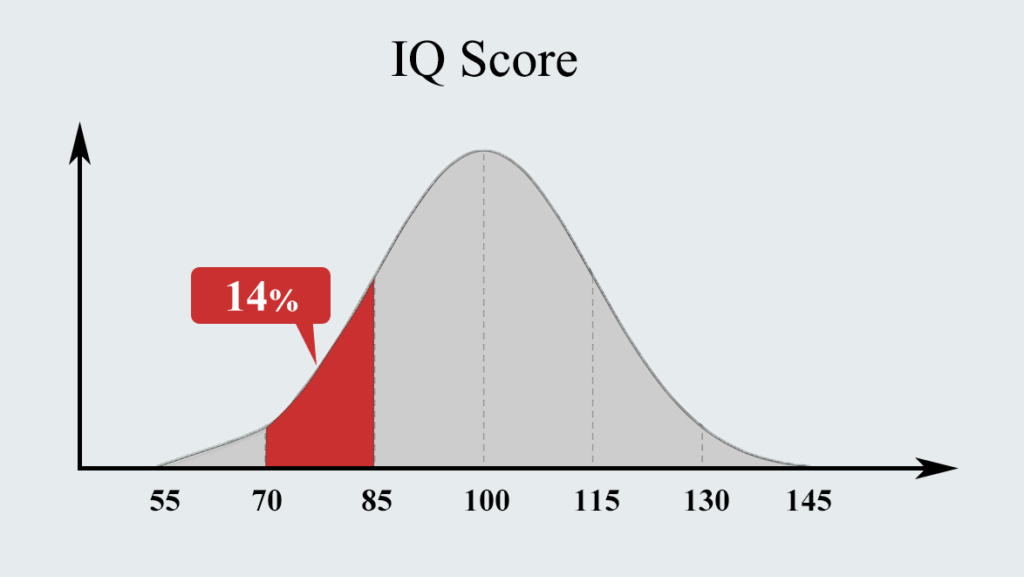
Based on the normal distribution of IQ, the cohort considered to be in the borderline range (IQ 70-84) is statistically estimated to account for about 14% of the population, a ratio believed to exist universally, regardless of societal structure or time period.
The purpose of this paper is to unravel why they are in an “extremely dangerous state” in modern digital society, and why existing countermeasures (such as education and awareness campaigns) are “(actively) harmful.”
Building on that, I wish to present the only “structural” solution to protect them. This is not merely a technological debate, but an attempt to question the very “way of being” of our society.
Chapter 1
The Despair of Forrest Gump and Charlie Gordon – Considering the “Cruelty” of Self-Responsibility
One of the “common sense” principles underpinning modern digital society is “self-responsibility.” The internet is a “free” space, brimming with knowledge, entertainment, and business opportunities.
Therefore:
—Whatever happens there
—Even if one steps into a clever trap
It is held that the user must ultimately make their own judgments and bear the responsibility. At first glance, this sounds like a natural principle, intrinsically linked with “freedom.”
But imagine this. What would happen if our beloved Forrest (Forrest Gump) or Charlie Gordon (Flowers for Algernon) were thrown into the jungle of modern smartphone society?
Forrest, with his pure-hearted nature, would believe the email from the “Nigerian Prince” 100% and wire his entire fortune, thinking, “I’m helping someone!” He would then click the link in the “Congratulations!” SMS without suspicion, submitting all his personal information.
Charlie, in his desperate wish to “become smart,” would pour his meager savings into a suspicious information product promising “Easy high income! Become smarter!”—a far more expensive and malicious trap than his “rabbit’s foot” lucky charm.

This is not mere “imagination.” At this very moment, “millions” of “modern-day Gumps and Charlies” exist in our society.
And perhaps we are, unconsciously, clinging to a certain “illusion”? That illusion is the expectation of “good fortune,” like that depicted in the movie Forrest Gump. The protagonist, Gump, despite his intellectual handicap (a characteristic close to borderline functioning), overcomes numerous hardships and achieves success through his rare purity, sincerity, and the (miraculous) goodwill of those around him. Are we not “naively” believing that the “Eternal 14%,” thrown into the “jungle” of digital society, should also somehow survive precisely because of their purity?
However, for the Gumps and Charlies of today, no movie-like “good fortune” will arrive. The tool known as the “open smartphone” has transformed into “the perfect gateway” for anonymous malice (scammers, criminal organizations) to ruthlessly exploit their purity and characteristics.
This not only makes them “victims” of fraud but also harbors the risk of structurally dragging them down into becoming perpetrators who harm society, such as through “dark part-time jobs” (i.e., robbery or fraud mules).
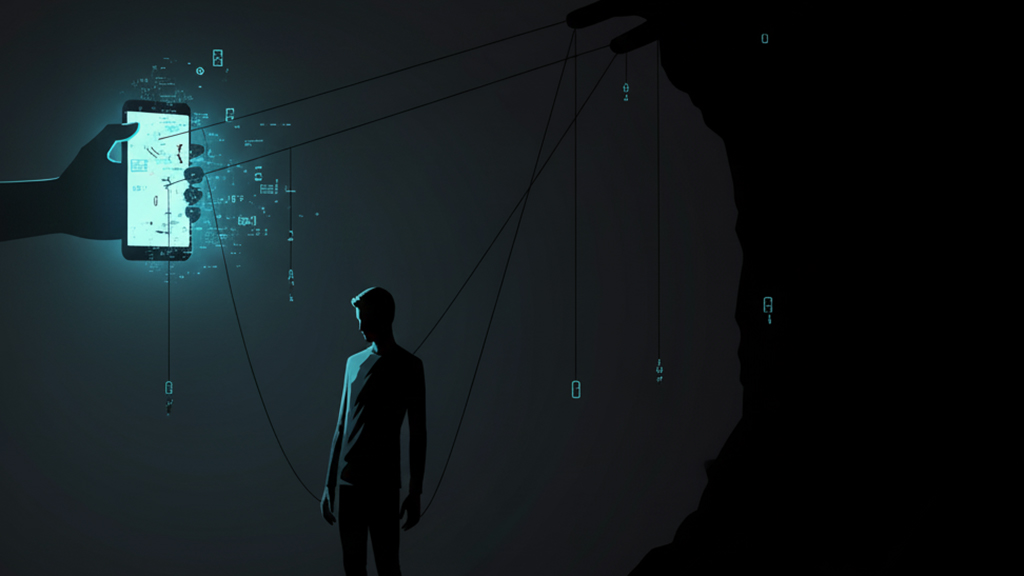
Expecting “self-responsibility” from them (which is akin to “praying for Gump’s luck”) is synonymous with abandoning them, defenseless, right in the middle of a “structure of exploitation and crime.”
It is an act of extreme “cruelty,” carried out in the name of “freedom.”
Chapter 2
The Road Paved with Good Intentions and What Lies at Its End – The Case of Charlie Gordon
Even if it is cruel to abandon the vulnerable in the name of “self-responsibility,” some may rebut that society is not just standing idly by. “Why not just ‘educate’ and ‘enlighten’ them?”—Increase digital literacy throughout society, teach the sophisticated methods of fraud, and urge caution. At first glance, this seems like a countermeasure of “goodwill” that should naturally be implemented. But what kind of “future” truly awaits at the end of this road paved with “goodwill”?
In considering this question, the story of Charlie Gordon, the protagonist of Daniel Keyes’ masterpiece Flowers for Algernon, offers a stinging insight. His life is a prime example of how “goodwill” can lead to a tragic outcome.
Charlie’s mother could not accept her son Charlie “as he was” (his characteristic) due to his intellectual disability (or borderline functioning). From a (distorted) love and concern for appearances, driven by a desire to make her son “normal,” she believed “he could do it if he tried.” She forced impossible studies upon him and made him undergo ineffective treatments. Her “goodwill” became “violence” that denied Charlie’s “individuality,” leaving deep scars on his heart.
Is there not a startling resemblance between this structure of “Charlie’s mother” and the “awareness campaigns” or “smartphone classes” conducted by modern society? Society (= the mother) averts its eyes from the “unchangeable reality” of the vulnerable layer’s “cognitive characteristics” (= Charlie / borderline intelligence). It then applies (well-intentioned) pressure to “change the individual,” saying, “You should be able to see through scams ‘if you try hard enough’ (like ‘normal’ people),” or “You can master it ‘if you just learn.’”
However, the fact that understanding and implementing those “awareness” lessons is extremely difficult given their characteristics is ignored. As a result, they blame themselves for “not being able to,” are labeled as “lacking effort,” and are driven into a corner mentally.
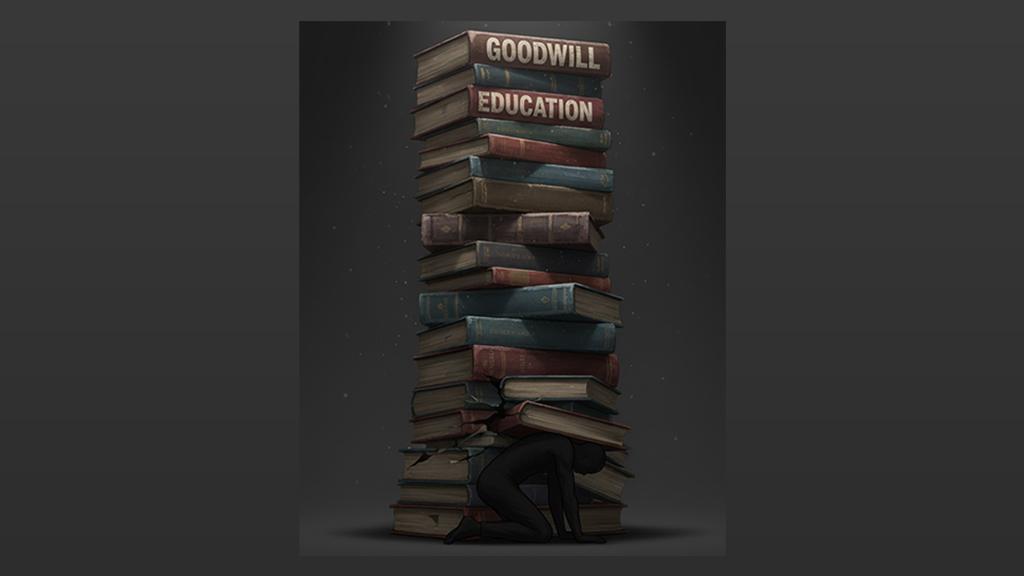
Furthermore, this structural “violence” is closely linked to “economic exploitation.” Recall the “quack doctors” in Flowers for Algernon, whom Charlie’s mother turned to in desperation. They administered useless treatments at high prices, exploited her financially, and gave her a false sense of security by claiming “he is getting better little by little.”
Is this not strikingly similar to what is happening at smartphone retail stores today? Preying on the desperate wish (read: weakness) of the elderly and their families “not to be left behind by society,” they sell “new, high-spec, high-priced” smartphones that are unnecessary (and extremely dangerous) for them, saying, “This is the ‘normal’ thing to have,” or “You’ll be ‘safe’ with these latest features.”
This act, while appearing to make them “members of digital society,” is in reality nothing less than throwing them empty-handed into the malicious “jungle.”
At the root of this problem, there is one more factor: the “arrogance of the strong,” as seen in “Professor Nemur.” Professor Nemur, who performed the surgery on Charlie, did not see him as an equal human being, but rather as “an experimental animal he ‘made’ smart,” or “a ‘creation’ to prove his own ‘greatness’.” He completely failed to understand the “dignity Charlie possessed as a human being, just as he was,” before the surgery.
Turning this back on ourselves, have we, the “digital elite,” not become “Professor Nemurs”? Do we not unconsciously look down on the vulnerable layer who “cannot master smartphones,” viewing them as “inferior beings” or “subjects to be ‘educated’”?
Do we deny their “true selves” by refusing to understand their “cognitive characteristics as individuality” (which is different from ours) and insisting, “They should be able to do it ‘if they try’ (just like us)”? What if, at the root of the “awareness” we provide with “goodwill,” there is this “top-down arrogance”—in other words, an unconscious “supremacist ideology” that “Our ‘values’ (digital skills) are ‘absolute,’ and those who cannot reach them are ‘inferior’”—lies hidden…?

Perhaps that is the true “root cause” leading to the tragedy of “Algernon”—forcing individuals to change—and giving rise to the “imposition of effort” known as “awareness” (i.e., “well-intentioned violence”).
In conclusion, the road of “education” and “awareness,” though paved with “goodwill,” does not lead to a true solution, neither in Charlie Gordon’s case nor in the case of today’s “hidden digital divide” layer.
This is because the road itself contains the deep-seated structural problems of “violence” (the “coercion of the individual to change”) and the “arrogance of the strong.” The “future” that awaits at the end of that road is, for them, anything but bright.
Chapter 3
The “Real” Big Brother
So, neither “self-responsibility” nor “education” serves as a solution to protect the vulnerable layer; in fact, they are even harmful. What, then, is the answer?
If I propose a “structural reform”—such as a “safe device” and a “closed network” that are physically separated from the “open internet,” exclude dangerous gateways like browsers and app stores, and are protected by strict identity authentication—a “conventional criticism” will invariably fly back as if by reflex.
“Will the ‘State’ ‘control’ everything?” “A ‘closed’ network?” “What about privacy!?” “Isn’t that the world of George Orwell’s 1984—isn’t that ‘Big Brother’ itself!?”
I fundamentally disagree.
The essence of the domination by “Big Brother” (the Party) that Orwell depicted in 1984 is not mere “surveillance.” It is a system of “totalitarianism” that forces citizens to simultaneously believe in “Doublespeak”—perfect contradictions such as “War is Peace” and “Freedom is Slavery”—thereby paralyzing their thoughts, and “eliminating” those who cannot conform to the system as “thought criminals.”
Now, let’s turn this around and look at the “structure” of digital society “today.” Are we (especially the “hidden digital divide” layer this paper focuses on, i.e., those with borderline intelligence) not being forced into “Doublespeak” by this very societal structure?
【Belief 1】 “The Internet is ‘Good’ and ‘Essential’.” “Smartphones are convenient! Indispensable for life! If you don’t have one, you’ll be left behind by society! (Therefore, ‘everyone must have one’!)”
【Belief 2】 “The Internet is ‘Evil’ and ‘Dangerous’.” “Smartphones are dangerous! They are crawling with scammers and criminals! Be suspicious at all times! Don’t get fooled! (Therefore, ‘use it at your own risk’!)”
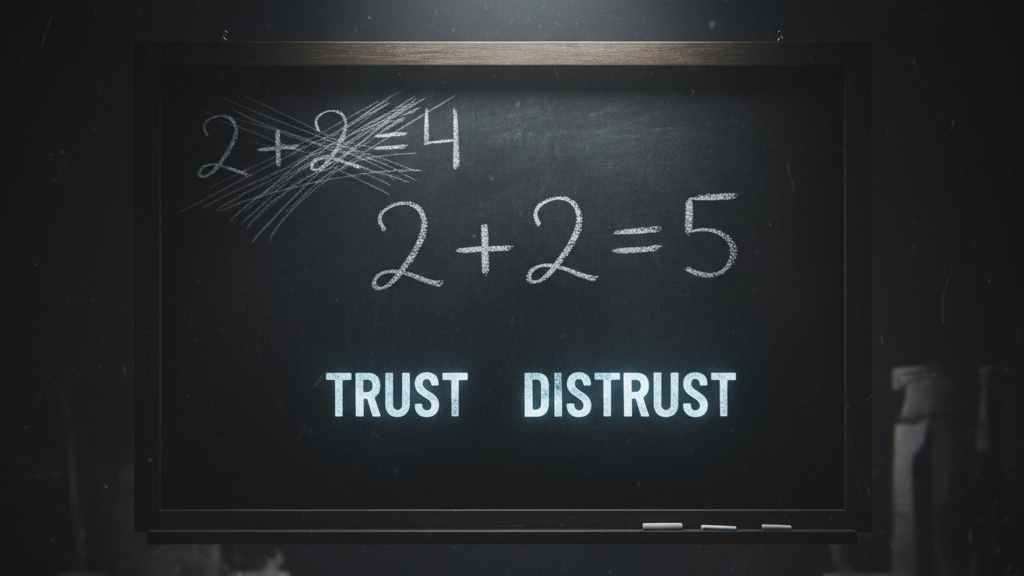
Society demands that the vulnerable layer simultaneously execute this “perfect contradiction”: “‘Absolutely trust it (use it)’” and “‘Absolutely doubt it (self-responsibility).’” However, given their “cognitive characteristics,” it is next to impossible for them to continuously and correctly execute this “Doublespeak.”
What happens to those who “fail” (i.e., get scammed / become complicit in crime)? They are condemned in the name of “self-responsibility”—“It’s your fault (for failing at Doublespeak)”—and are “eliminated” from society by being arrested (social death), or their financial foundation is destroyed by losing all their assets (economic death).
“Eliminating those who cannot conform to the system (the contradiction)”…
Is this “current structure” itself not the “most insidious Big Brother,” the “unseen totalitarianism” system, that Orwell depicted?
Are those who criticize our proposed “safe structure” as “Big Brother” not just averting their eyes from the existence of this “real” Big Brother?
Conclusion
“The Safe Structure” is the “Anti-Big Brother”
As this paper has revealed, the “freedom” brought by the “open smartphone society” was a blessing for the “strong,” but for the “weak” (the “hidden digital divide” layer, the “Eternal 14%”), it was “danger” itself.
Demanding “self-responsibility” from them is a “fantasy” like Forrest Gump and an act of “cruelty.”
Trying to change them through “education (enlightenment)” is “well-intentioned violence” and “arrogance” like “Charlie’s mother” or “Professor Nemur,” and will only lead to the tragedy of “Algernon.”
And this “current social structure,” which forces “Doublespeak in the name of self-responsibility” and “eliminates” those who cannot comply, is “the ‘real’ Big Brother.”
If so, there is only one answer.
“Don’t change the individual. Change the environment (structure).”
The “structural reform” this paper proposes—“a safe device and closed network, physically separated, with dangerous functions eliminated, and protected by strict identity authentication”—is not “Big Brother.” The crucial point is that this is not intended to regulate or replace existing “free smartphones” or the “open internet.”
Rather, it is another option; it is a “humanitarian defense infrastructure,” a “‘physical’ shelter (sanctuary),” designed to “protect” the most vulnerable “Eternal 14%” of society from “the ‘real’ Big Brother” (oppression in the name of self-responsibility).
In the first place, preventing society’s vulnerable layer from being exploited by malicious organizations, providing safe information to citizens, and protecting them from malicious communications (fraud, crime solicitation, etc.) can be considered a vital part of modern “national security,” addressing a threat that could shake the very foundations of the state.
This is not about “surveilling” them. It is about affirming them “as they are” and providing a “structure” where they can live with dignity, “without fear of fraud” and “without being forced into crime.” That is the only humanitarian “answer.”
Let us apply the thought experiment of John Rawls’ “Veil of Ignorance.” If we were to choose the structure of our society in a state where we had no idea whether we would be born as the “strong” or the “weak (the hidden digital divide)” in the digital age, which would we choose?
A society that, in the name of “freedom,” neglects the risk of the weak being exploited? Or a society where a “shelter” exists (even at the cost of some convenience) to guarantee a minimum level of safety for everyone? The answer should be obvious.
The choice of “doing nothing (maintaining the status quo),” when viewed from behind the veil, may in fact be the most unethical choice of all.
The entities possessing the necessary resources, technological capabilities (vertical integration of hardware, OS, cloud, and AI), and (hopefully) the philosophy to design, implement, and operate such a “safe structure” on a national scale are likely few and far between, even on a global scale.
(Note: There is a detailed consideration for a concrete implementation model—including business models and stakeholder management—that would make this “safe structure” economically sustainable as social infrastructure and provide incentives to technology providers and related industries. However, the primary focus of this paper is to present its necessity and philosophical rationale.)
Should not the mission to make information “accessible and useful” begin, first and foremost, by making it “safe”?
“Don’t be evil.”
I am convinced that the true path to practicing these words lies not in abandoning the vulnerable cohort to the wilderness of “self-responsibility,” but in building a “safe structure” for them.
This may be more than just a business opportunity; it may be a historic responsibility that defines the social infrastructure of the next generation.